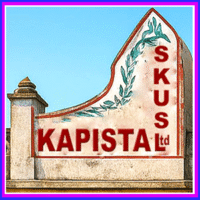
About the Society
The nation had just gained independence, and the rural areas of Bankura—particularly the remote villages—were still financially fragile. With the cultivation season approaching and water set in the fields, farmers lacked the necessary capital to begin agricultural activities. They were compelled to borrow money from local moneylenders at exorbitant interest rates. As a result, farmers often incurred losses, sometimes even mortgaging their land, and in extreme cases struggled to secure two proper meals a day.
It was during this challenging period that a group of visionary young men from Kapista village took a pledge to transform their community. They decided that each household would contribute a small amount of paddy (ten pai), which would be pooled to form a modest fund. This initiative was named “Tarun Samabay Samity.”
At that time, the society had no permanent office or building of its own to store the collected paddy or manage its activities.
Those young men who worked outside the village would return and handle the society’s documentation, while the others went door to door collecting paddy. Farmers were provided paddy loans during the cultivation season and repaid the loan after harvesting. Gradually, the stock increased, and the need for formal registration became evident.
Eventually, the society was renamed “Kapista Large Sized Agricultural Credit Co-operative Society Ltd.”
In 1957, it was officially registered under the name “Kapista SKUS Ltd.”
As time passed, the activities of the society expanded. Surrounding villages were included, and the cooperative began extending financial support not only to farmers but also to local residents. Alongside paddy loans, cash loans were also introduced. To improve service quality, a trained manager was appointed.
The deposit system was gradually introduced—although savings in the form of paddy remained more common than cash. At one point, the total cash deposit amounted to Rs. 112.50 To increase this amount, a special community meeting was held. Women were encouraged to save a handful of rice every day, emphasising the importance of securing their families’ future. They were also motivated to raise poultry as a means of developing their own savings. These initiatives yielded remarkable results.
The society’s first office was a small mud structure at the site of the present ration dealer’s shop. Later, in 1963, construction of a new building began, and by 1964, the administrative building and warehouse were completed. Over time, land was purchased, property was expanded, and a fair-price distribution system was introduced—making the society a central pillar of support for local residents. Sugar, wheat, mayla, and markin cloth were supplied at affordable prices, which proved extremely valuable to the community at that time.
During Debi Lal Government’s agricultural loan waiver period, banks were initially reluctant to extend the benefit to cooperative societies. The society’s directors obtained the Reserve Bank of India’s official order and compelled the banks to ensure that cooperative farmers received the same benefits. This stands as a milestone in the history of the institution.
Today’s Kapista SKUS Ltd. stands on the strong foundation laid by those farsighted youths and the unwavering support of the villagers who believed in the power of cooperation. On the society’s land now stand the village’s primary school, high school, and health centre.
For over seven decades, with the dedication of officers, board members, employees, and the active cooperation of the local community, the society has successfully implemented numerous socio-economic development initiatives. Some plans achieved exceptional success, while others faced challenges—but the cooperative has firmly established itself as an institution of pride, trust, and progress.
Kapista SKUS Ltd. is not just a financial cooperative—it is a symbol of hope, unity, collaboration, and development for the people of Kapista and its neighbouring regions. The tiny seed of cooperation sown in the difficult years following independence has now grown into a flourishing tree.
With the same spirit of transparency, mutual support, self-reliance, and collective growth, the society remains committed to the development of the region in the years ahead.